%20(3).png)
For four years at Vizzuality, we led the Communications and Dissemination work package of CoCliCo (Coastal Climate Core Services), helping a brilliant group of climate scientists, coastal engineers and modellers turn dense, technical research into actionable and usable information.
Six months have passed since we wrapped up the project and we thought it was worth reflecting on our role. In this blog you'll understand more about what we learned along the way and why we're excited to do more of this type of work in the future.
Our role: turning data into decisions.
CoCliCo brought together partners like BRGM, Deltares, Kiel University, IHCantabria, Mercator Ocean International and many others, each contributing deep expertise in sea-level rise, coastal hazards, exposure and adaptation economics. As a consortium member, we led the Communications, Dissemination and Exploitation work package — meaning we coordinated how the project's research, findings and outputs were communicated, both across the consortium and out to the wider world.
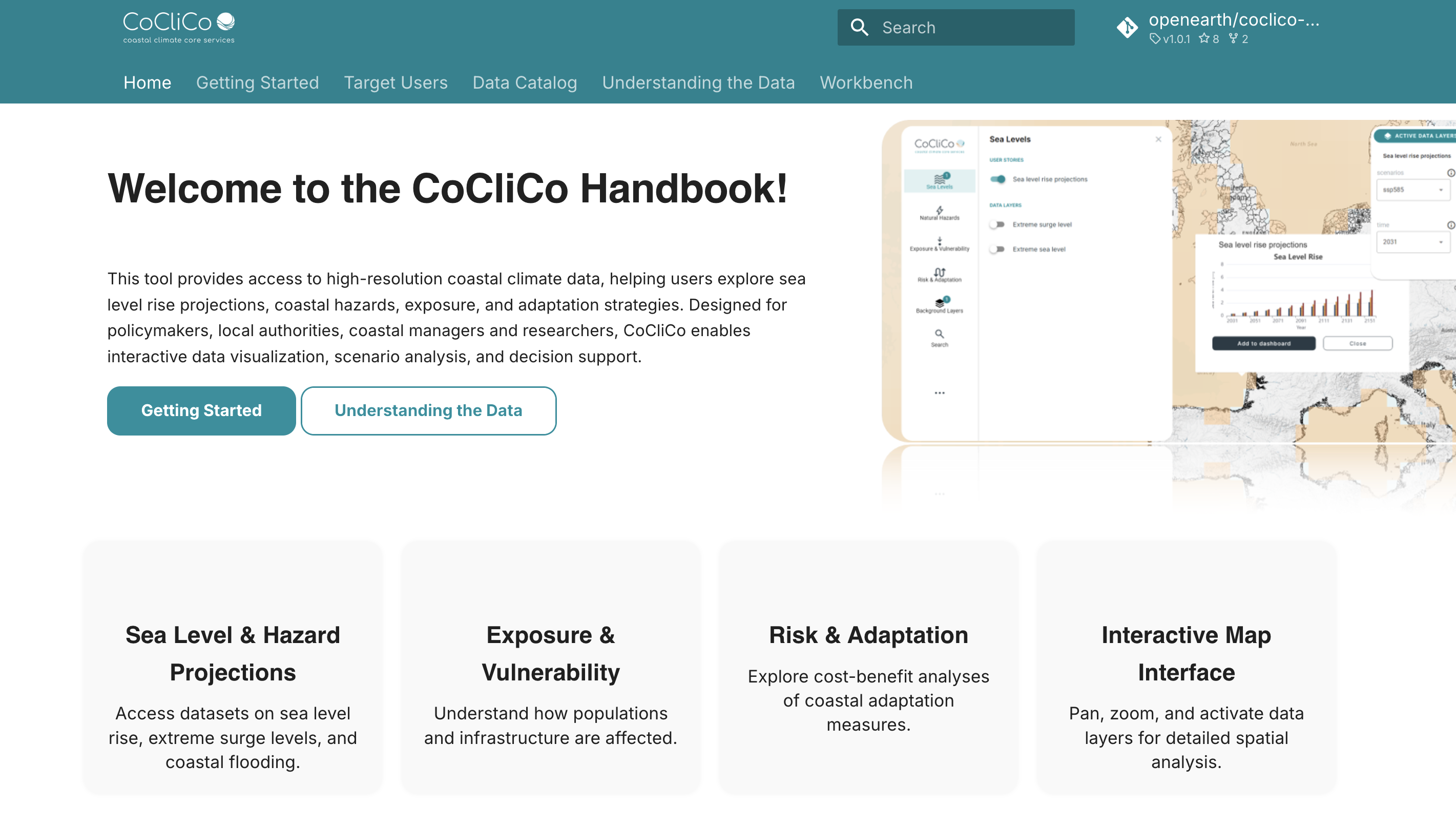
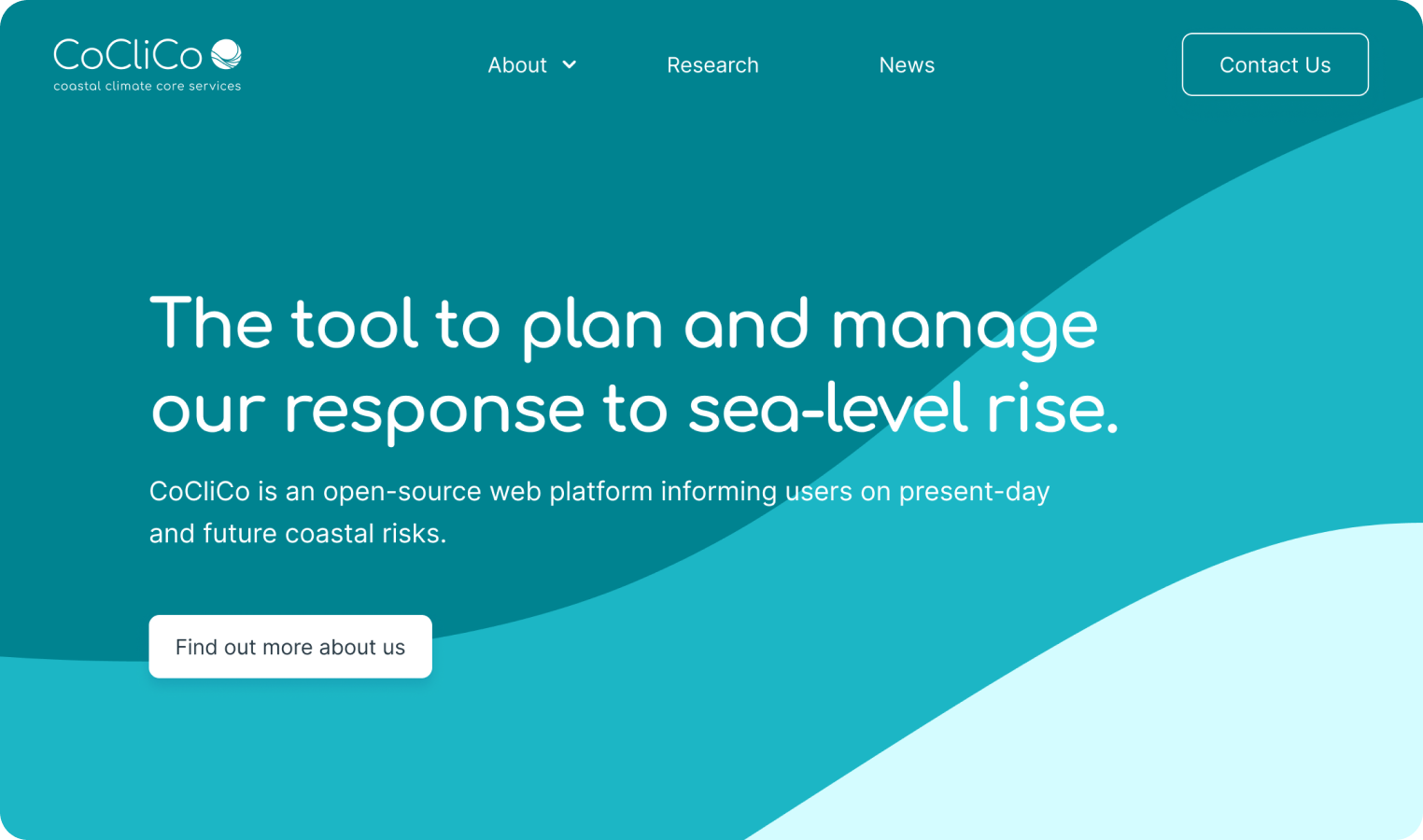
In practice, this means that we were the ones behind:
- Building the CoCliCo website — the public front door to the whole project, and the home for the platform, the Handbook, deliverables and news
- Writing the ongoing stream of content that kept the project visible over four years: blog posts, social media, and updates on findings, milestones and events
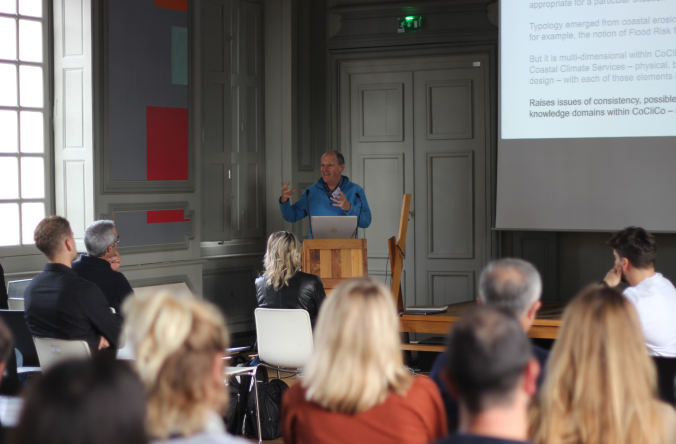
- Helping organise the project's webinars, connecting the consortium's researchers with the policymakers, planners and practitioners who needed to hear from them directly
- Coordinating with every partner to translate their research and latest findings into communications the wider public and decision-makers could actually engage with
- Advising Deltares on the design and development of the platform, making sure the User Stories and user experience stayed central to how the data was presented
Data visualisation and communication are not an afterthought in a project like this, they're what decides whether four years of excellent science actually reaches the people making decisions about coastal defense, land use and public investment. That's the part of climate services work we care about most, and it's the core of what we do at Vizzuality more broadly.
What we're proud of.
Watching CoCliCo's platform go from a set of spreadsheets and scientific outputs to something a mayor's office, a national agency or a port authority could open in a browser and immediately understand — that's the type of transformation we work for.
We're proud that the platform is open-source, that its data has already been picked up by the Copernicus Marine Service and the European Digital Twin of the Ocean, and that a simplified companion tool was showcased at the UN Ocean Decade Conference in 2024.
We're equally proud of the collaborative process behind it which was genuinely interdisciplinary, spanning climate scientists, engineers, social scientists and designers, across more than a dozen partner organisations and several sister projects (SCORE, PROTECT, Adapt4Coast, REST-COAST).
Why this matters beyond CoCliCo.
Coastal risk is just one of many domains where excellent European research is at risk of staying under-used because it might be hard to access, interpret, or understand without context. We've seen the same pattern in our work on forests, oceans and biodiversity: the science exists, the data is there but what's missing is the translation process that makes it usable by the people who need it most.
That's exactly the gap we want to keep closing. If you're part of a research consortium, a Horizon Europe proposal team, or a public institution working on environmental or climate data and you face the challenge of making complex datasets navigable, visual and decision-ready — we'd love to talk. It's the kind of collaboration we do best, and we think it's where projects like CoCliCo create the most lasting value.
Thinking about your next Horizon Europe (or Horizon-adjacent) proposal, and want a communications and data visualisation partner who's done this before? Get in touch with our team, we'd be glad to explore what we could build together.
Thank you:
Thank you to Gonéri Le Cozannet and BRGM for coordinating CoCliCo so thoughtfully, and to every partner and researcher across the consortium for four years of collaboration. It's been a genuine privilege to help tell this story, and we're looking forward to seeing where the data, the platform and the community around it go next.
Curious about the technical detail behind CoCliCo? Read the full project closing blog for a deeper look at the platform, the Workbench, the Exploratory Tools and the research outputs, or explore everything directly at coclicoservices.eu.